
Introduction
Electric vehicles have transformed the way people travel by offering a cleaner and more efficient alternative to conventional fuel-powered vehicles. While many riders focus on battery capacity, charging time, and riding range, another important factor plays a significant role in everyday performance. That factor is State of Charge (SOC).
State of Charge tells riders how much usable energy remains in the battery at any given time. It helps estimate the remaining riding range, supports efficient charging, and allows the Battery Management System (BMS) to operate the battery safely and efficiently.
Whether you ride an electric motorcycle for daily commuting or longer journeys, understanding State of Charge in EV batteries can help you make informed decisions and improve your overall riding experience.
In this blog, we'll explain what State of Charge is, why it matters, how it is calculated, and why it is an essential part of every modern electric motorcycle.
What Is State of Charge (SOC)?
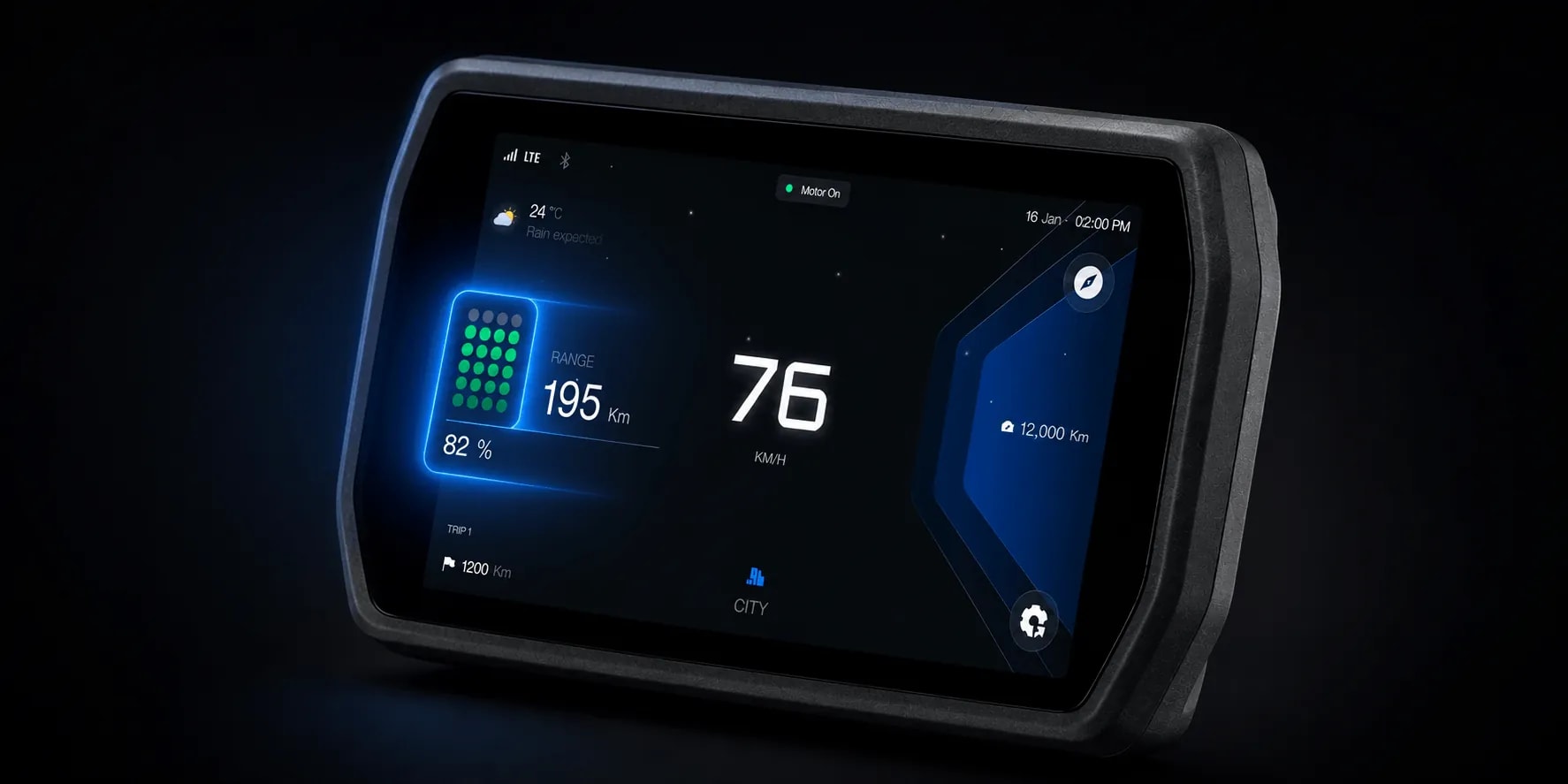
State of Charge (SOC) refers to the amount of energy available in a battery compared to its total usable capacity. It is usually displayed as a percentage, similar to the battery indicator on a smartphone.
For example:
-
100% SOC means the battery is fully charged.
-
50% SOC means approximately half of the usable energy remains.
-
10% SOC indicates the battery is running low and may require charging soon.
Unlike a simple voltage reading, SOC is continuously estimated by the Battery Management System using information such as battery voltage, current flow, temperature, and previous charging and discharging patterns. This provides riders with a more reliable estimate of the battery's remaining energy.
Why State of Charge Matters in Electric Vehicles
Accurate Driving Range Estimation
One of the biggest concerns for EV riders is knowing how far they can travel before recharging. State of Charge plays an important role in calculating the estimated riding range.
A properly calculated SOC allows the motorcycle to provide a more dependable estimate of the remaining distance based on the available battery energy. This helps riders plan their journeys more confidently and reduces uncertainty during daily travel.
Improved Battery Performance
Battery performance depends on operating within recommended charging limits. By continuously monitoring the available charge, the Battery Management System ensures that the battery operates efficiently under different riding conditions.
Accurate State of Charge information helps maintain:
-
Consistent power delivery
-
Smooth acceleration
-
Better energy efficiency
-
Reliable riding performance
This contributes to a more enjoyable and dependable riding experience.
Better Charging Efficiency
State of Charge also helps manage the charging process. During charging, the Battery Management System monitors SOC to determine how much energy the battery can safely accept.
As the battery approaches full charge, charging speed may gradually decrease to protect the battery cells and maintain long-term performance.
This controlled charging process helps improve charging efficiency while reducing unnecessary stress on the battery.
Enhanced Battery Protection
Overcharging and excessive battery discharge can shorten battery life and affect overall reliability.
By accurately estimating State of Charge, the Battery Management System can prevent the battery from operating outside its recommended limits. This helps protect battery cells and supports safer vehicle operation.
Battery protection through accurate SOC estimation contributes to:
-
Longer battery lifespan
-
Improved reliability
-
Better charging management
-
Increased operational safety
How Is State of Charge Calculated?
Unlike a fuel gauge in a conventional vehicle, State of Charge cannot be measured directly. Instead, it is estimated using multiple battery parameters.
Modern Battery Management Systems calculate SOC by analysing:
-
Battery voltage
-
Charging and discharging current
-
Battery capacity
-
Previous usage history
Many advanced Battery Management Systems combine several estimation methods to improve accuracy under different operating conditions. This allows riders to receive more dependable battery information throughout the ride.
Factors That Affect State of Charge Accuracy
Although modern Battery Management Systems are highly accurate, several factors can influence SOC estimation.
These include:
-
Battery ageing over time
-
High or low operating temperatures
-
Frequent fast charging
-
Aggressive riding habits
-
Battery calibration
Continuous monitoring and regular battery management help minimise these variations and improve the accuracy of the displayed State of Charge.
Why State of Charge Matters for Indian EV Riders
Electric motorcycles in India often operate in demanding conditions, including high temperatures, heavy traffic, and frequent stop-and-go riding. These factors can influence battery performance throughout the day.
An accurate State of Charge estimate helps riders better understand their available battery energy before beginning a trip or locating the next charging point.
As electric mobility continues to grow across India, dependable battery information becomes increasingly important for improving rider confidence and supporting everyday commuting.
How AVORE Supports Advanced Battery Technology
At AVORE, every electric motorcycle is designed with a strong focus on battery performance, efficiency, and reliability.
The Battery Management System continuously monitors important battery parameters, including State of Charge, temperature, voltage, and current. This allows the battery to operate efficiently while supporting dependable performance across different riding conditions.
By combining advanced battery management with thoughtfully engineered electric motorcycles, AVORE continues to develop technology that improves everyday riding and supports the future of electric mobility.
Conclusion
State of Charge is much more than a battery percentage displayed on the dashboard. It is an important indicator that helps riders understand how much usable energy remains in their electric motorcycle.
Accurate SOC estimation supports better riding range prediction, charging efficiency, battery protection, and long-term reliability. With the help of an advanced Battery Management System, riders receive dependable battery information that improves both performance and confidence.
As electric motorcycles continue to become more advanced, understanding State of Charge helps riders make better charging decisions and enjoy a more reliable ownership experience.